The Direct Link: How BCI Turns Thoughts into Action

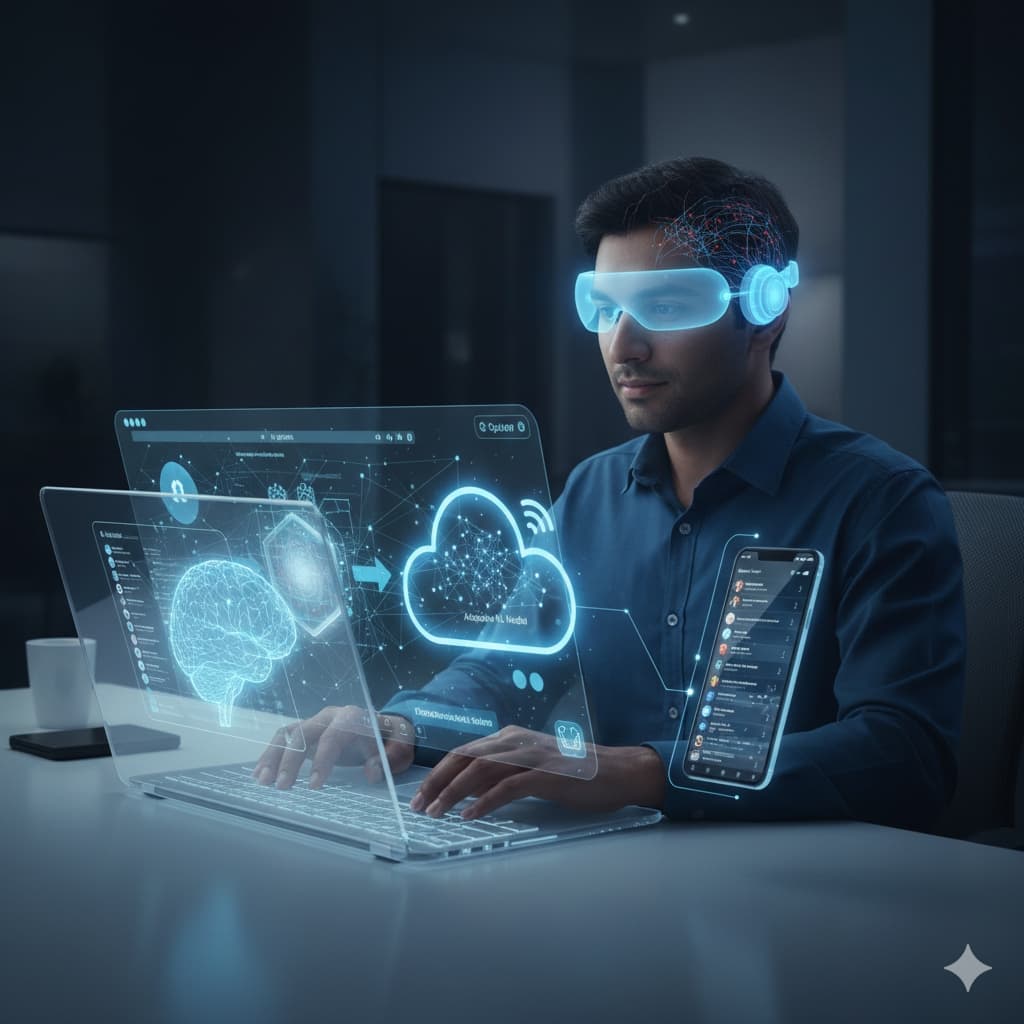
1. The Vision: Eliminating the Middleman
Imagine a world where the speed of your phone is limited only by the speed of your thoughts. Currently, we use fingers to type and voices to speak—these are "slow" biological intermediaries. Brain-Computer Interface (BCI) aims to bypass these, intercepting messages directly from the source: your brain.
2. The Mechanism: Capturing the "Neural Spark"
Our brain is an electrical powerhouse. Every movement, memory, or intention is driven by neurons firing across synapses.
- The Sensor: We use EEG (Electroencephalography) sensors—non-invasive headsets—to detect the tiny electromagnetic fluctuations on the scalp.
- The Signature: When you think about "clicking" or "moving," your brain creates a specific, repeatable electrical pattern.
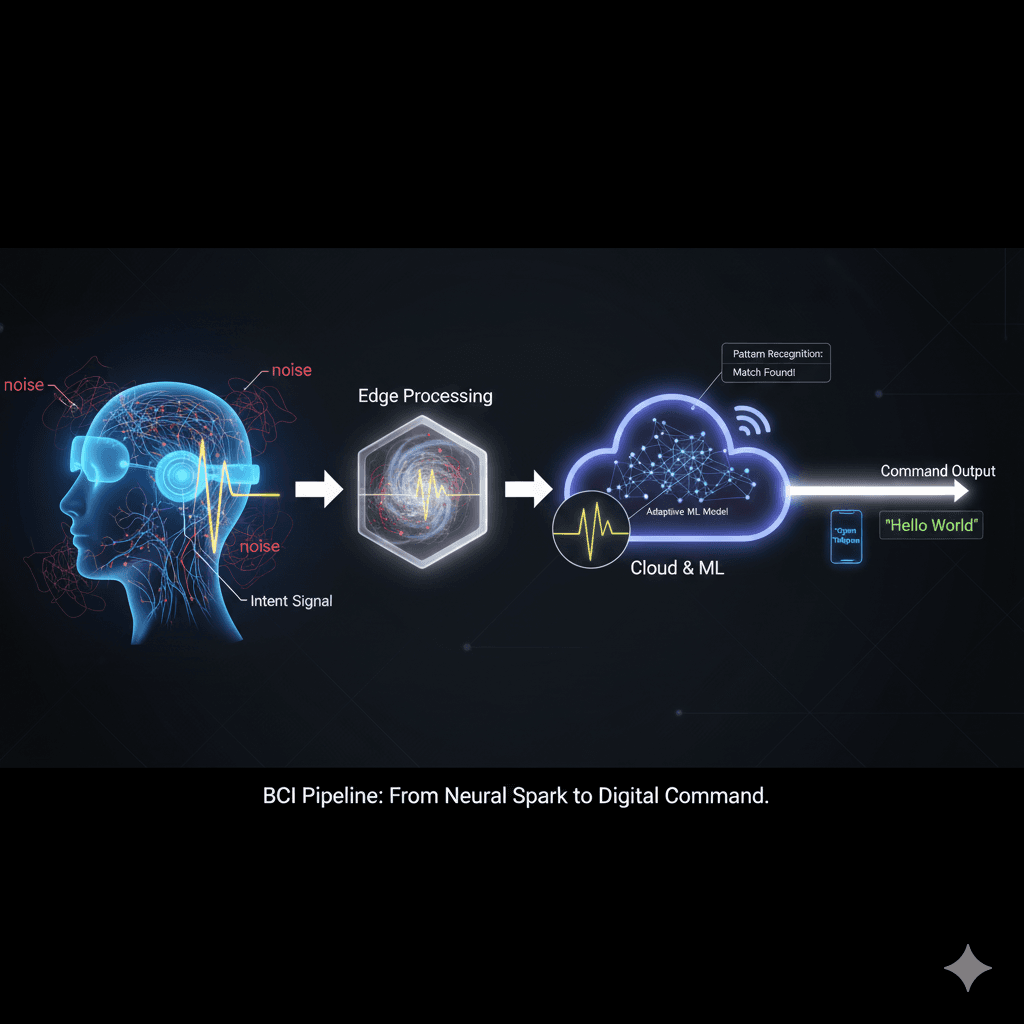
Neural Signal Processing Pipeline
3. The Pipeline: From Scalp to Cloud
Capturing the signal is only 10% of the battle. The journey of a "thought" looks like this:
- Acquisition: EEG sensors pick up raw, messy electrical waves.
- Edge Processing: A local device (like your phone) filters out "artifacts"—eye blinks, jaw clenches, or external electrical hum.
- The Cloud & ML: The "cleaned" signal is sent to a cloud server where a Machine Learning model (the "Interpreter") analyzes it.
- Translation: The model identifies the pattern and converts it into a digital command: Input -> "Hello World" or Command -> "Open Telegram."
4. The "Experience Gap": Why isn't it perfect yet?
As you mentioned, BCI faces several "bottlenecks" that require elite engineering to solve:
- The Noise Problem: Brain signals are incredibly faint (measured in microvolts). A simple eye blink can be 10x stronger than a "thought" signal, acting like a loud shout in a quiet library.
- Non-Stationarity: Your brain signals today might look slightly different tomorrow based on your mood, caffeine levels, or fatigue. The ML model must be adaptive.
- The "Midas Touch": How does the system know if you are actually intending to click something or just thinking about it? Distinguishing "intent" from "background thought" is the ultimate challenge.
Final Thoughts
BCI represents the ultimate frontier in human-computer interaction. While challenges remain, the potential to control our digital world with nothing but thought is closer than ever.